China Launches Advanced Naval Defenses as Drones Reshape Maritime Warfare
China Unveils New Anti-Drone Air Defence System
The Chinese People's Liberation Army (PLA) has been focusing on enhancing its defensive capabilities in response to the growing threat posed by anti-ship drones, especially after conflicts such as the war in Ukraine and the ongoing tensions in the Middle East. In a recent development, the Chinese navy has introduced a new anti-drone air defence system, as reported by state broadcaster CCTV.
Drones have significantly changed the landscape of naval warfare in recent years. They have emerged as a major threat to modern warships, particularly in conflicts like Russia’s war against Ukraine and the US-Israeli operations against Iran. The use of drones in these scenarios has demonstrated their effectiveness as low-cost, asymmetric weapons that can cause substantial damage.
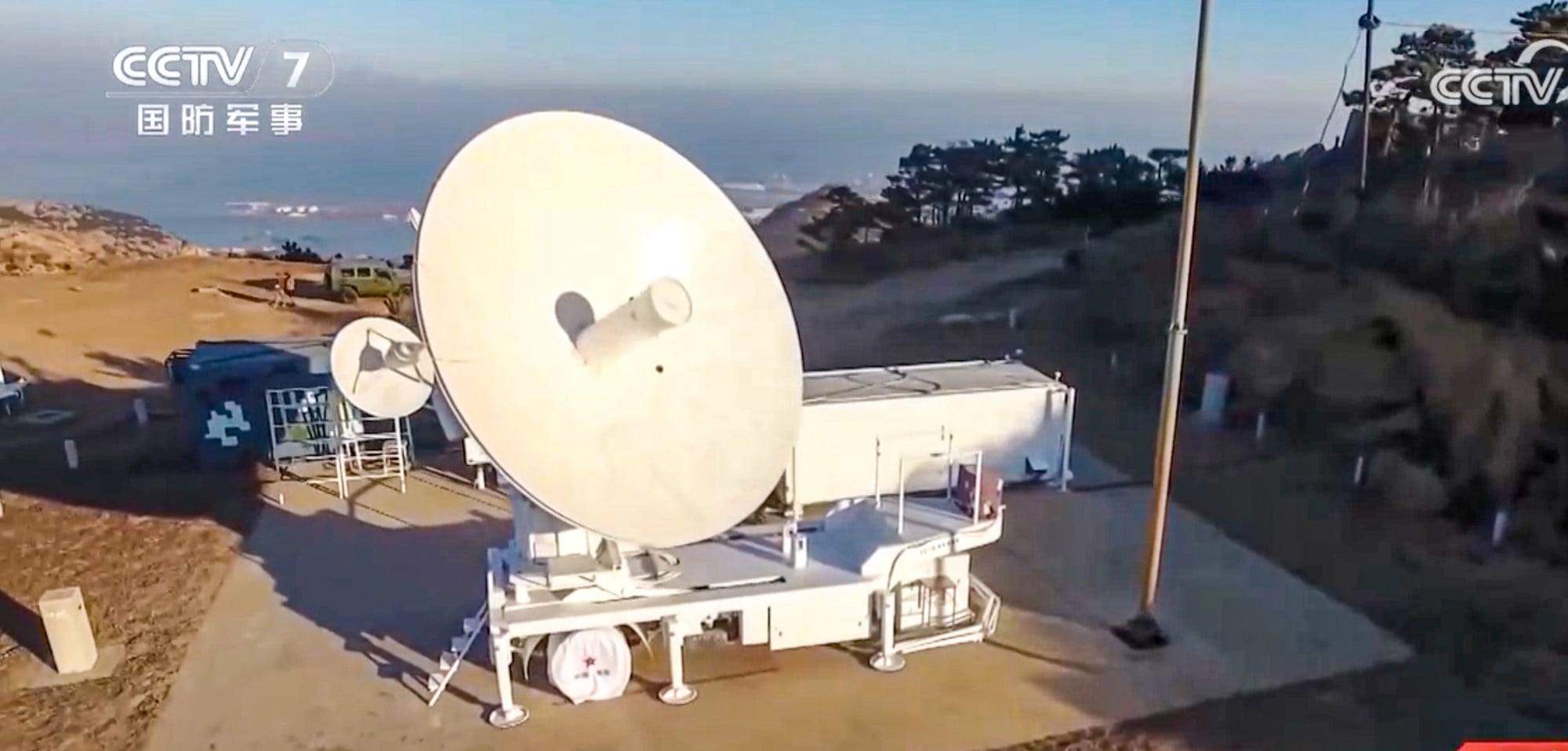
According to the CCTV report, a "finalisation test" was successfully conducted in the Bohai Sea, which confirms that the weapon system meets all operational requirements. This test is a crucial step toward mass production and deployment of the system. During the test, the system intercepted multiple drones performing "high-difficulty" ultra-low-altitude and stealth attacks in a realistic combat simulation.
"These manoeuvres were designed to comprehensively test the weapon system's interception capabilities under complex electromagnetic environments and ultra-low-altitude penetration conditions," the report stated.
The footage shown included drones being launched from land and flying just above the sea surface before being destroyed. However, the report did not provide clear close-ups of the intercepting weapon or the platform used for the launch. Additionally, the equipment in the control centre where the test was conducted was blurred out.
CCTV did not disclose the name of the weapon or the exact date of the test. It only mentioned that the test provided "solid data" to help improve the system's combat effectiveness.
In modern warfare, drones have repeatedly proven their value. Ukrainian forces have used both naval and aerial drones to inflict significant losses on Russia's Black Sea fleet. Similarly, Iran has carried out drone-led operations for surveillance and attempted blockades of the Strait of Hormuz.
One of the most effective tactics has been the use of ultra-low-altitude drones that fly just above the surface of the sea, remaining below the radar horizon of shipborne air defence systems until the final moments of their approach. When flying at low altitudes, noise and interference from the sea further degrade sensor performance, making it difficult for defenders to detect incoming drones. All these factors create an extremely narrow window for detection, tracking, and interception.
To address this challenge, the PLA Navy has been expanding its arsenal of ship-based terminal and short-range air defence systems. Alongside upgrading its existing short-range interceptor missiles, it has also developed a new high-powered laser system called the Liaoyuan-1. This directed-energy weapon, unveiled during a People's Liberation Army parade in Beijing last September, is designed to provide an effective and economical countermeasure against small and swarm drones.
Key Developments in Naval Defence
- Enhanced Defensive Capabilities: The PLA has been working to improve its defences against the growing threat of anti-ship drones.
- New Anti-Drone System: A new anti-drone air defence system has been tested and certified for mass production.
- Realistic Combat Simulation: The test involved intercepting drones conducting high-difficulty ultra-low-altitude and stealth attacks.
- Challenges with Drone Detection: Ultra-low-altitude drones are difficult to detect due to radar limitations and environmental interference.
- Liaoyuan-1 Laser System: A new high-powered laser system has been developed to counter small and swarm drones effectively.
As the global military landscape continues to evolve, the integration of advanced technologies like the Liaoyuan-1 will play a critical role in ensuring naval superiority and security.
