Donut Lab's Battery Claims Under Scrutiny: New Evidence Challenges Solid-State Status
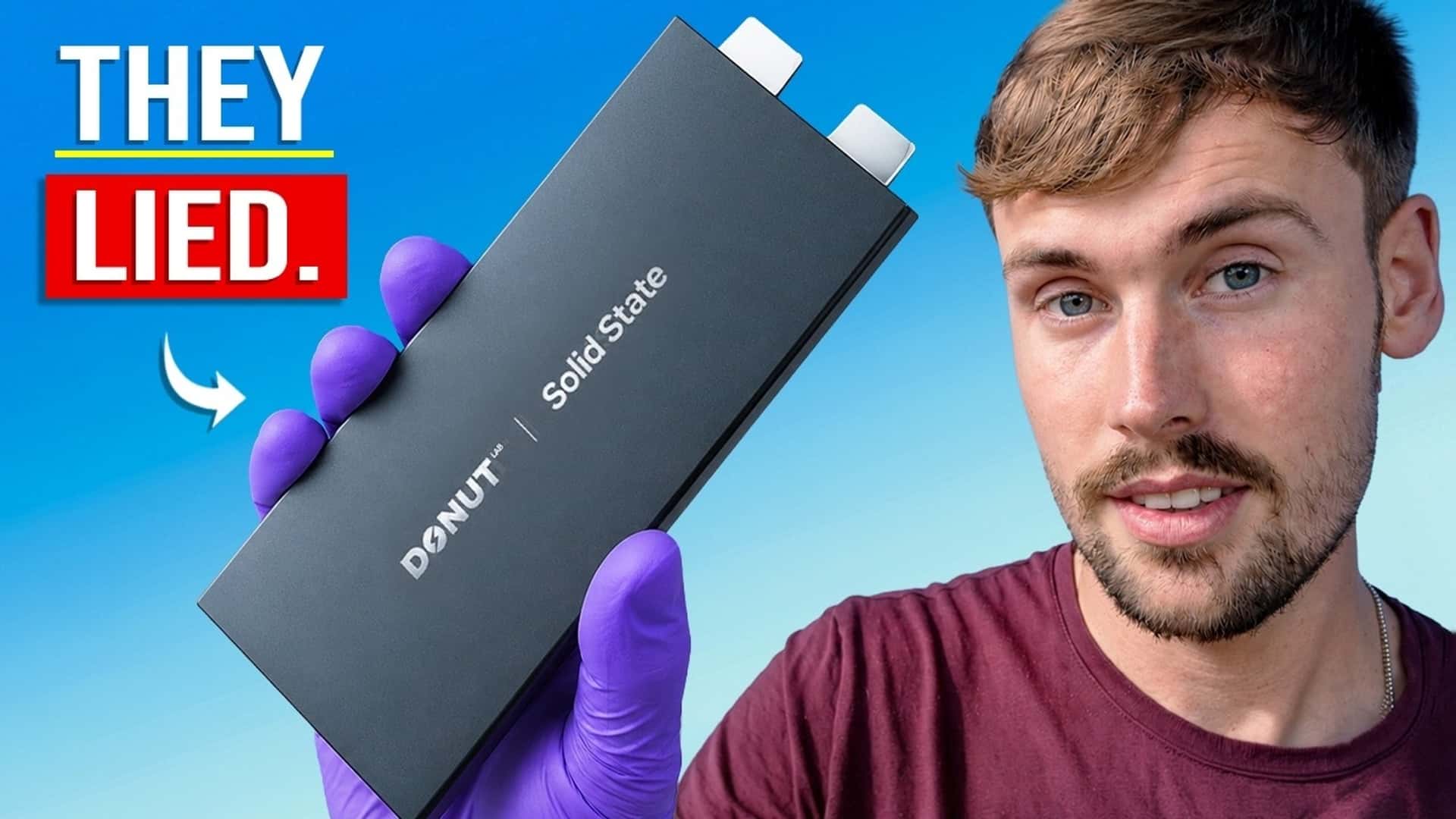
The Rise and Controversy of Donut Lab's Solid-State Battery
In recent months, a number of questions have emerged about the nature of Donut Lab’s solid-state battery. This innovation, developed in collaboration with Verge Motorcycles, was presented as the "world’s first solid-state battery ready for use in OEM vehicle manufacturing." If true, this would be a major breakthrough in electric vehicle (EV) technology, potentially reshaping the industry over the past two decades.
Solid-state batteries are often referred to as the holy grail of EV technology. They theoretically offer several advantages over traditional lithium-ion batteries, including lighter weight, lower cost, higher energy density, faster charging times, and longer lifespans. Major automotive and tech companies such as Honda, Toyota, Kawasaki, General Motors, Panasonic, and Ford have invested heavily in their own research into solid-state batteries, but none have yet managed to bring a viable product to market.
This makes the claims by Donut Lab and Verge Motorcycles all the more intriguing—and controversial. A small startup seemingly achieving what industry giants have struggled with has sparked both excitement and skepticism.
Key Claims and Promises
According to Donut Lab’s original press release, its solid-state battery offers an energy density of 400 Wh/kg, which could enable longer range, lighter vehicle designs, and greater flexibility in product development. It also claimed that the battery can be fully charged in just five minutes without limiting the charge to 80%, and it supports full discharge safely and reliably.
The company further emphasized the safety benefits of its battery, stating that it eliminates the risk of thermal runaway and metallic dendrites—two common causes of battery fires. This, they argue, makes their battery "extremely safe" and "truly revolutionary."
To support these claims, Donut Lab worked with VTT Technical Research Centre of Finland to conduct independent testing on one of its battery cells. However, the term "cell" is important here: Donut did not provide a complete battery for testing, raising further questions about the scope and validity of the results.
Skepticism and Criticism
Dr. Ryan Hughes, known online as Ziroth, has been one of the most vocal critics of Donut Lab’s claims. In a detailed video, he examined the company’s data and found significant discrepancies. According to Hughes, multiple independent battery experts have confirmed that the Donut Battery is essentially a lithium-ion battery in disguise, not the solid-state technology the company has advertised.
Hughes’ investigation also highlighted issues with the voltage and expansion curve of the battery cell, which contradict the claims made by Donut Lab. These findings align with concerns raised by other outlets and labs, including InsideEVs, which has closely followed the controversy.
Donut Lab's Response
In response to Hughes’ video, Donut Lab issued a statement denying any new revelations and emphasizing that the content merely rehashed previous claims. The company also pointed out that Ziroth has a commercial partnership with CATL, a Chinese battery giant, suggesting a potential conflict of interest.
Donut Lab also addressed claims made by Lauri Peltola, a former employee of Nordic Nano Group. The company stated that Peltola had no access to the technical details of their battery development and that legal action has been taken against him for his alleged activities.
Despite these statements, many questions remain unanswered. The company’s third-party testing has not fully addressed the concerns raised by experts and critics. Additionally, Verge Motorcycles has announced that customers will soon be able to order a solid-state battery for its TS Pro EV motorcycle, but the option is still not available on the company’s website.
Ongoing Uncertainty
As of now, the situation remains unresolved. There is a growing legal battle, ongoing investigations, and a solid-state-powered motorcycle that appears to be in limbo. While Donut Lab and Verge Motorcycles continue to assert the validity of their technology, the broader industry remains skeptical.
The story of Donut Lab’s solid-state battery serves as a reminder of the challenges and complexities involved in bringing groundbreaking technology to market. It also highlights the importance of transparency, independent verification, and rigorous testing in the EV industry. Whether the battery is truly revolutionary or simply a well-marketed product remains to be seen.
