Can AI Help You Find True Love?
The Rise of AI in Modern Dating
For years, dating apps promised singles that love could be easier if only they had more options. More profiles. More matches. More filters. More chances to meet someone outside their usual social circle. But after more than a decade of swiping, ghosting, dead-end conversations and dating burnout, many people are no longer asking for more options. They are asking for better ones.
That may explain why AI dating assistants are suddenly becoming one of the biggest conversations in modern dating. Instead of leaving users to swipe through endless profiles, dating apps are experimenting with artificial intelligence that can help build profiles, suggest matches, guide conversations and even act like a personal matchmaker.
Bumble has been moving toward an AI-powered reset, including an assistant called Bee, while Match Group has also been investing in AI to improve match quality and ease swipe fatigue. The message from the dating industry is clear: the old model is not working well enough, and apps are looking for a new way to keep singles interested.
But for anyone who has ever been disappointed by dating apps, the question is not just whether AI can recommend a better match. The deeper question is whether AI can understand what people actually need in love.

What is an AI Dating Assistant?
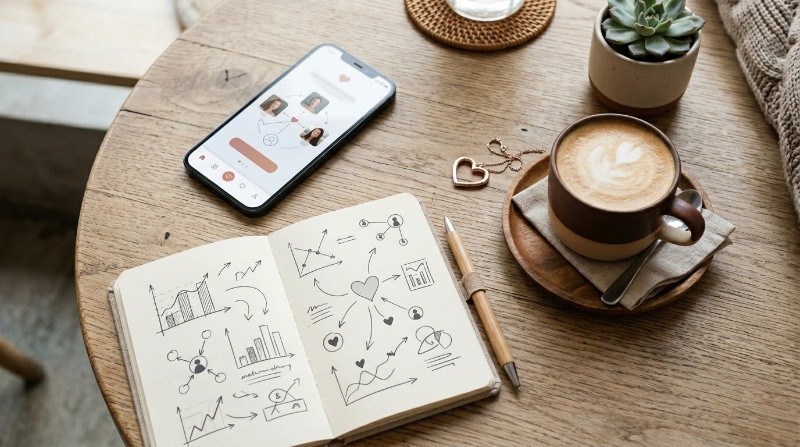
An AI dating assistant is a digital tool that uses artificial intelligence to help someone navigate online dating. Depending on the app, it may help users write stronger profiles, choose better photos, suggest opening messages, recommend matches or learn what kind of person someone may be most compatible with.
In theory, this sounds useful. Many people are bad at presenting themselves online. They choose photos that do not reflect them well. They write vague bios. They send boring opening messages. They keep matching with people who do not want the same kind of relationship.
An AI assistant could help with some of that. It could notice patterns. It could ask better onboarding questions. It could encourage users to be more specific about their values, lifestyle and dating intentions. It could help people move away from shallow swiping and toward more thoughtful connection.
That is the attractive promise: less wasted time, fewer low-quality matches and a dating experience that feels more intentional.
But romance is not only a data problem. That is where things get complicated.
Why Dating Apps Are Turning to AI Now
Dating apps are turning to AI because many users are tired. Singles are tired of swiping. Tired of conversations that go nowhere. Tired of matching with people who are not emotionally available. Tired of feeling like the apps are designed to keep them scrolling rather than help them build something real.
AI gives dating companies a new story to tell. Instead of promising endless choice, they can promise better curation. Instead of asking people to judge hundreds of profiles, they can suggest that technology will learn what users actually want. Instead of making love feel like a slot machine, they can make it feel like matchmaking.
That shift matters because the dating app world has a trust problem. Many users suspect that apps benefit when people stay single and keep using them. Whether or not that is always fair, the feeling is real. People want to believe that the tools they use are actually helping them find connection, not just feeding them more profiles.
AI dating assistants are being introduced into that emotional climate. They are not just a tech feature. They are a response to frustration.
How AI Could Make Dating Better
AI could help dating feel less random. If used well, it might guide people toward matches who share similar relationship goals, communication styles, values or life rhythms. That could be especially helpful for singles who feel overwhelmed by too many profiles.
It could also help people communicate more clearly. Many dating conversations fail because nobody knows how to begin. A thoughtful prompt, a better question or a clearer profile could make the first interaction less awkward.
AI could also help people avoid some mismatches earlier. If one person wants marriage and another wants casual dating, the app may be able to surface that difference before either person invests too much energy. If someone values emotional consistency and the other person wants something undefined, that information matters.
For people who struggle to describe themselves, AI may also be useful. It can help turn vague statements like “I like fun” into something more revealing, such as “I love low-key weekends, live music, long walks and relationships that feel emotionally calm.”
That kind of clarity can improve dating. The more honestly people present themselves, the easier it becomes to attract someone who is actually aligned.
Where AI Dating Can Go Wrong
The danger is that AI may make dating feel even more artificial if people use it to perform rather than communicate.
A profile written by AI may sound polished, but does it sound like the person? A message suggested by AI may be clever, but does it reflect real interest? A match recommendation may look good on paper, but can an algorithm understand chemistry, timing, emotional readiness or the strange little spark that makes someone unforgettable?
There is also the risk of outsourcing vulnerability. Dating requires people to take emotional risks. They have to say hello. Ask questions. Be rejected. Be curious. Be honest about what they want. If AI does too much of that work, users may become less practiced at being human with each other.
That could make dating easier in the short term and weaker in the long term.
Because love is not only about finding someone compatible. It is about becoming capable of connection.
Can AI Understand Chemistry?
AI may be able to predict some forms of compatibility, but chemistry is harder to measure.
Two people can share values, goals, education level, humor and lifestyle preferences and still feel nothing when they meet. Another pair can look mismatched on paper but feel unexpectedly comfortable together. Human attraction is shaped by voice, timing, body language, scent, humor, emotional presence, nervous systems and life experience.
That does not mean AI is useless. It may help narrow the field. It may help people avoid obvious mismatches. It may help users stop wasting time on people who want completely different things.
But AI should not be treated like a romantic oracle.
The best it can do is create better introductions. What happens after that still belongs to the people involved.
The Privacy Question Nobody Should Ignore
There is another issue with AI dating assistants: privacy.
Dating data is deeply personal. It can include romantic preferences, attachment patterns, relationship goals, sexual orientation, emotional vulnerabilities, religious values, family plans, insecurities, dealbreakers and private conversations. If AI tools are learning from that information, users should care about how it is stored, used and protected.
That does not mean nobody should use AI dating tools. But it does mean singles should be thoughtful. Before giving an app intimate details, users should understand what they are sharing and whether the tool is worth that level of access.
Romance already makes people vulnerable. Technology should not quietly add another layer of exposure without users noticing.
AI Can Help With Clarity, But Not Courage
One of the strongest uses of AI in dating may be helping people become clearer. It can suggest better prompts. It can help users describe what they are looking for. It can make profiles more specific. It can encourage people to state whether they want commitment, casual dating, marriage, children or emotional consistency.
But AI cannot give someone courage.
It cannot make an avoidant person emotionally available. It cannot make a dishonest person honest. It cannot make someone ready for commitment if they are only looking for validation. It cannot force people to stop ghosting, communicate after conflict or take responsibility for mixed signals.
That is the difference between dating technology and relationship maturity.
An app may introduce you to someone. It cannot build the relationship for you.

How to Use AI Dating Tools Without Losing Yourself
If you decide to use an AI dating assistant, treat it as a helper, not a replacement for your judgment.
Let it improve your profile, but make sure the final version sounds like you. Let it suggest conversation starters, but do not send messages you would never actually say. Let it recommend matches, but pay attention to how you feel when you interact with the person.
Be honest with the tool and with yourself. If you want a serious relationship, do not pretend you are casual just to get more matches. If consistency matters to you, say so. If you are not ready for commitment, say that too.
The point of AI should not be to make you more marketable. It should be to help you become more accurately represented.
Because the right match should not fall for a version of you designed by an algorithm. They should be interested in the person who actually shows up.
What AI Dating Says About Modern Love
The rise of AI dating assistants says something important about modern romance: people are overwhelmed, but they are not done hoping.
If singles had truly given up on love, they would not care whether apps improved. The demand for better tools shows that people still want connection. They simply want less chaos around it.
AI dating assistants may become part of the future. They may help people filter better, write better and match better. But they will not remove the emotional work of dating.
Someone still has to be brave enough to be honest. Someone still has to listen. Someone still has to show up after the first spark fades. Someone still has to repair after conflict. Someone still has to choose presence over endless options.
Technology can help open the door.
Love still has to walk through it.
Frequently Asked Questions
What is an AI dating assistant?
An AI dating assistant is a tool that uses artificial intelligence to help with online dating. It may help write profiles, suggest matches, improve conversations or learn what kind of partner someone is looking for.
Can AI help me find a better match?
AI may help by improving match recommendations and encouraging clearer profiles. However, it cannot guarantee chemistry, emotional readiness or long-term compatibility.
Is AI dating safe?
AI dating tools may be useful, but users should pay attention to privacy. Dating data can be very personal, so it is important to understand what information an app collects and how it may be used.
Can AI write my dating profile?
AI can help polish a dating profile, but the final version should still sound like you. A profile that is too generic or artificial may attract attention without creating genuine connection.
Will AI replace dating apps?
AI will likely become a bigger part of dating apps, but it will not replace the human side of dating. People still need emotional honesty, communication, attraction and real-life connection.
The Real Lesson Behind AI Dating
AI dating assistants may change the way people meet, but they will not change what love requires.
People do not only want better algorithms. They want to feel chosen. They want to stop wasting time. They want fewer confusing conversations and more emotionally available partners. They want technology to reduce the noise, not replace the tenderness.
If AI can help people become clearer, more honest and more intentional, it may be useful. But if it turns dating into another performance, it may only make modern romance feel more distant.
The best dating tool will never be the one that makes you sound perfect.
It will be the one that helps you show up as someone real.
