Early signs of a future tectonic shift emerge in Zambia

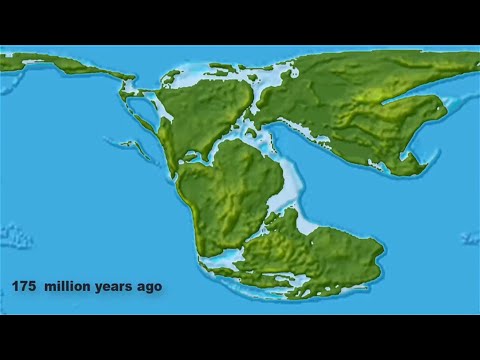
Hundreds of millions of years ago, the Earth was a very different place. The continents were all connected in a massive supercontinent known as Pangea, which eventually broke apart as tectonic plates shifted and moved. This process of continental drift continues today, and scientists are now exploring the possibility of a new tectonic boundary forming beneath Africa.
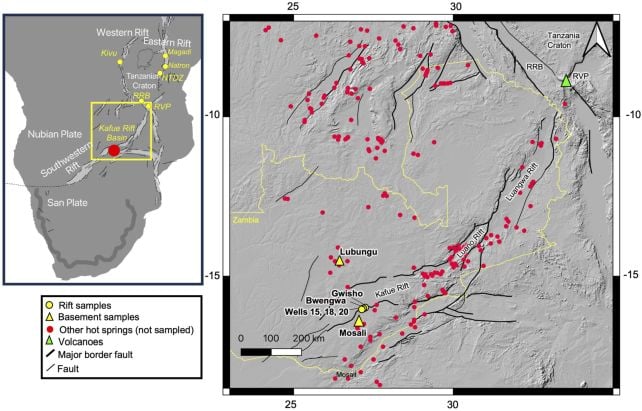
In a region called the Kafue Rift in Zambia, researchers have discovered helium isotopes rising through geothermal springs that suggest a connection to the Earth's mantle. This could be an early sign of active tectonic rifting, indicating that the area might be on the verge of becoming a new plate boundary.
 frameborder="0" allow="accelerometer; autoplay; clipboard-write; encrypted-media; gyroscope; picture-in-picture; web-share" referrerpolicy="strict-origin-when-cross-origin" allowfullscreen>
Geologist Mike Daly from the University of Oxford explains that the hot springs in the Kafue Rift show unique helium isotope signatures. These signatures indicate a direct link to the Earth’s mantle, which lies between 40 and 160 kilometers below the surface. This fluid connection suggests that the fault boundary of the Kafue Rift is active, and it may be an early sign of the break-up of sub-Saharan Africa.
The Earth has undergone significant changes over its 4.5 billion-year history. From a molten, inhospitable rock to a thriving biosphere, it has become the only known planet to support life. One of the key processes that helped shape this habitable world is tectonic activity.
Tectonic activity plays a crucial role in recycling minerals through the crust, reshaping continents and oceans, driving volcanic and geothermal activity, and regulating the long-term carbon cycle. While the Earth will one day cool enough for its tectonic plates to stop moving, this is likely billions of years away. Even though the ground feels solid beneath our feet, the planet is constantly shifting and changing.
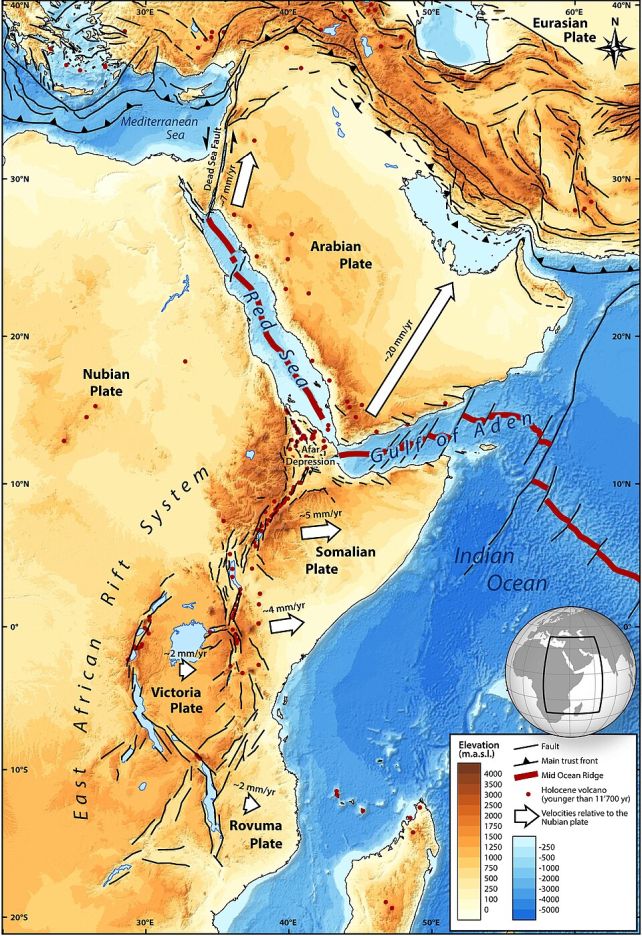
The African continent is already known for its extensive rifting systems. The Afar Depression, located near the Red Sea, and the East African Rift, where the Somali Plate is pulling away from the African Plate, are two examples of active rifting. The Kafue Rift is part of a larger rift system that stretches 2,500 kilometers across central Africa and may eventually connect to the Mid-Atlantic Ridge.
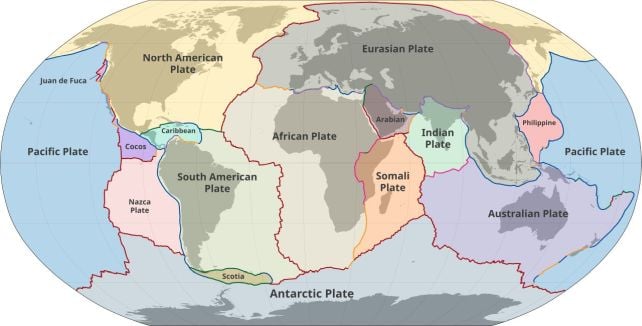
Scientists have long suspected that the Kafue Rift could be the beginning of a new plate boundary as the African Plate fractures. However, they lacked clear evidence until now. Daly explains that a rift is a large break in the Earth’s crust that creates subsidence and uplift. While some rifts may become plate boundaries, many stop before reaching that stage.
One way to detect signs of deep mantle activity is by studying isotope ratios. These ratios can reveal whether gases originated from deep within the Earth rather than from the surface. By analyzing samples from hot springs in the Kafue Rift, researchers found helium isotopes that point to a connection with the mantle.
Led by Rūta Karolytė from the University of Oxford, the team collected gas samples from six hot springs inside the Kafue Rift and two outside it. They found unusual isotope ratios in the rift area, suggesting a mantle origin. There was also a faint signal of mantle-derived carbon dioxide, which becomes more common as mantle activity increases.
In contrast, samples from outside the rift zone showed only crustal signatures. The researchers believe the data supports the early stages of lithospheric rifting, consistent with global geophysical observations.

If a tectonic boundary begins to form in central Africa, it will be a slow process that takes millions of years. However, it could offer opportunities for resource extraction, such as geothermal energy and hydrogen and helium gases. The research was partially funded by Kalahari GeoEnergy Ltd, a company interested in finding geothermal resources.
While the findings are promising, more research is needed. The study focused on a single region of the larger rift system, and additional samples from other areas could help confirm the results. If similar mantle-derived helium anomalies are found in other parts of the rift, it would provide stronger evidence for an emerging plate boundary capable of separating continents.
The study was published in Frontiers in Earth Science.
