Robots in Action as Researchers Advance AI and Automation
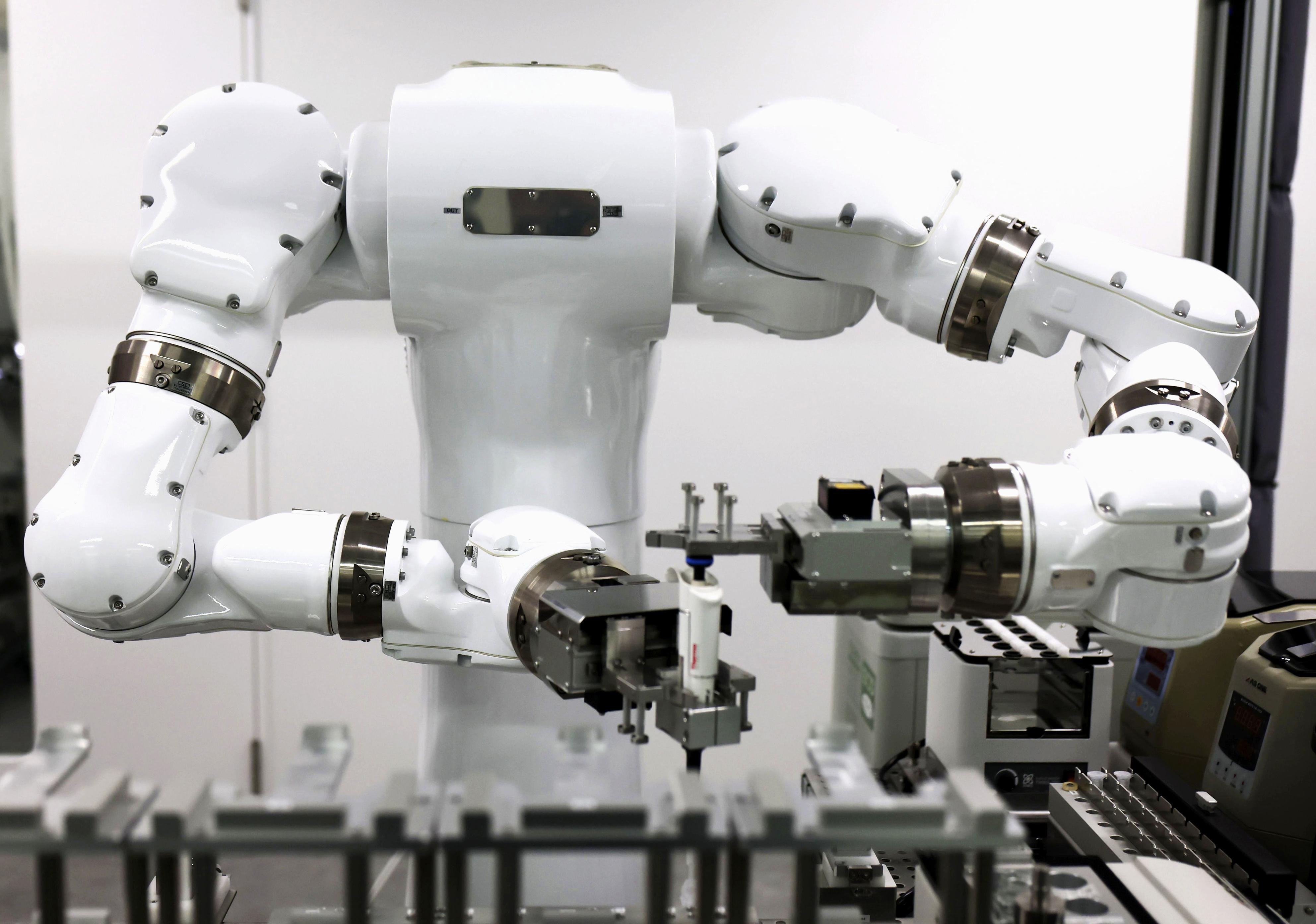
Introduction to the Robotics Innovation Center
In a groundbreaking move, a university in Tokyo has launched a laboratory where robots are conducting medical experiments that were traditionally performed by human researchers. This initiative aims to automate nearly every aspect of the research process, marking a significant shift in how scientific studies are carried out.
The facility, known as the Robotics Innovation Center, is located on the Yushima campus of the Institute of Science Tokyo. It features 10 robots, including a humanoid model named Maholo LabDroid, and operates without any human staff. The center represents a bold step towards a future where automation plays a central role in scientific discovery.
Key Features of the Robotics Innovation Center
The Robotics Innovation Center is equipped with advanced robotic systems designed to handle complex tasks. These robots are capable of performing delicate operations such as transferring precise amounts of reagents and opening doors of temperature-controlled equipment to place or remove items. Additionally, cell cultivation, which has already been programmed into the system, can be carried out automatically.
The university has ambitious plans to expand the number of robots at the center significantly. By 2040, the goal is to have around 2,000 robots working together to carry out almost all research tasks, from generating hypotheses to experimental verification.
Vision for the Future of Scientific Research
Keiichi Nakayama, the head of the center, emphasized the importance of AI and robotics in achieving the university's vision. "We want to make Japan's science the best in the world," he stated during the opening ceremony of the facility in mid-April. Robots even participated in the ribbon-cutting event, highlighting their integral role in the center's operations.
This initiative comes at a time when research institutions are facing challenges such as labor shortages and the need to minimize human error in experimental work. By leveraging automation, the university hopes to address these issues and enhance the efficiency and accuracy of scientific research.
Real-World Applications of Maholo LabDroid
One of the notable robots in the center is Maholo LabDroid, which has already been introduced at a hospital in Kobe, Hyogo Prefecture. This hospital focuses on ophthalmology and uses Maholo in clinical research involving induced pluripotent stem cells, particularly for cell culture tasks.
Researchers who have been involved in operating Maholo in Kobe have also joined the Robotics Innovation Center, bringing their expertise and experience to this new venture. This collaboration underscores the potential of robotics in transforming medical research and improving patient outcomes.
Conclusion
The establishment of the Robotics Innovation Center marks a pivotal moment in the field of scientific research. By integrating advanced robotics and artificial intelligence, the university is paving the way for a future where automation plays a crucial role in driving scientific advancements. As the center continues to grow and evolve, it has the potential to set new standards in research efficiency and innovation.
