MWC 2026: High Costs Hinder Africa's Internet Growth
The Challenge of Smartphone Affordability in Africa
The cost of a smartphone remains a significant barrier for hundreds of millions of Africans, creating a gap between mobile coverage and internet access. This issue was highlighted at the Mobile World Congress (MWC) in Barcelona, where cutting-edge technologies were showcased, but the conversation also focused on the real-world challenges faced by many in Africa.
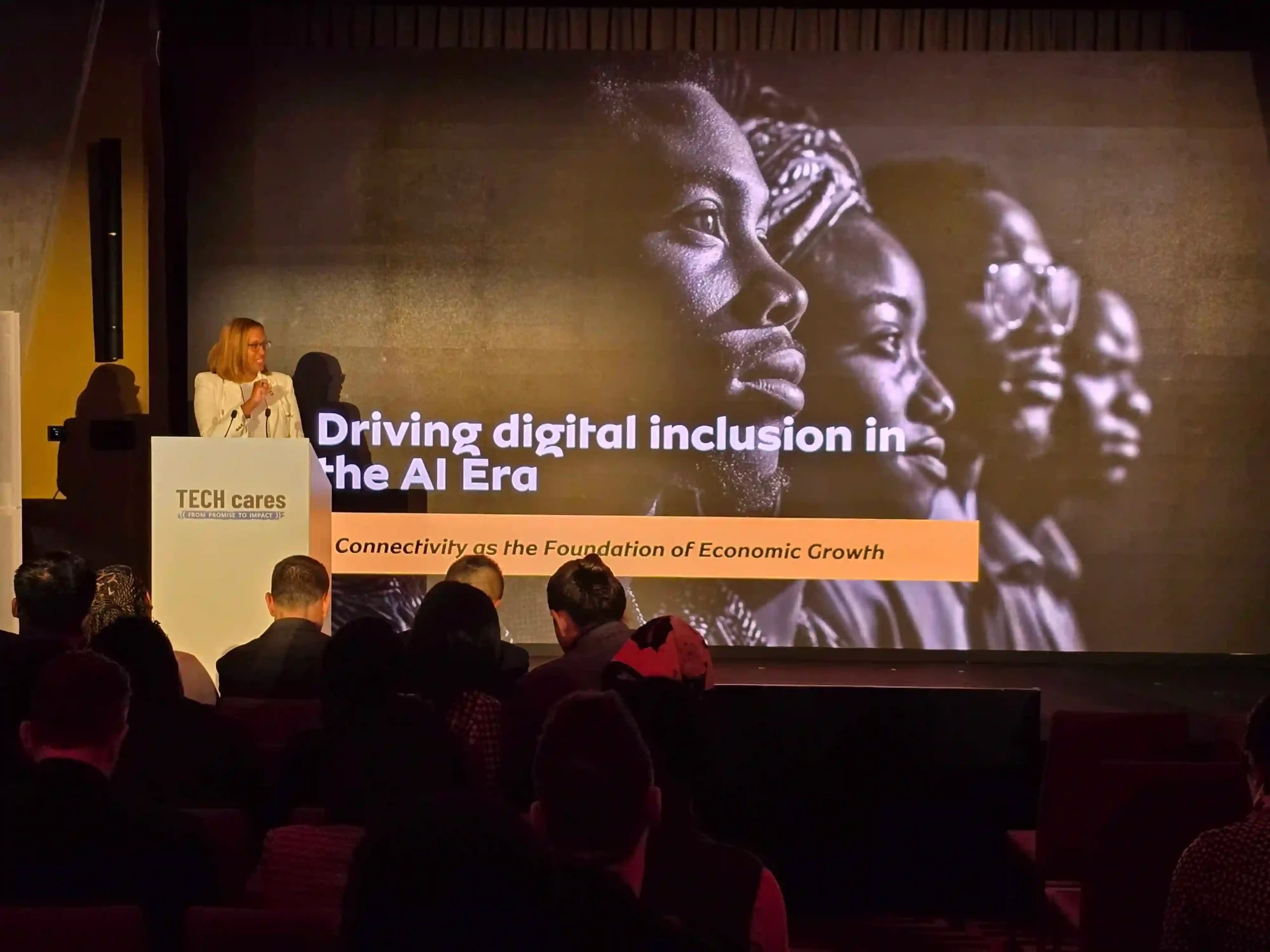
Marina Madale, group executive for sustainability and shared value at MTN, emphasized during the Tech Cares Forum hosted by Huawei that "coverage without the device is exclusion." She pointed out that without a smartphone, individuals cannot fully benefit from the digital world.
GSMA's Handset Affordability Coalition
In response to this challenge, the GSMA, which organizes MWC, launched the Handset Affordability Coalition. This initiative aims to pilot smartphones priced around $40 in six African markets: the Democratic Republic of Congo, Ethiopia, Nigeria, Rwanda, Tanzania, and Uganda. The coalition includes operators such as MTN, Airtel, Orange, Vodacom, Axian Telecom, and Ethio Telecom, along with handset manufacturers and development organizations.
The goal of the coalition is to bridge the gap between mobile network coverage and actual internet use. While operators have invested heavily in expanding network infrastructure into rural areas, the economics of the smartphone has become the next obstacle.
Vivek Badrinath, director general of the GSMA, stated that "affordable smartphones enable digital and financial inclusion, economic opportunity, and innovation." He noted that 3.1 billion people have mobile coverage but are not connected to the mobile internet.
Infrastructure and Device Challenges
Madale added that in many communities, the network is available, but the income is not. "The device is shared in a household. Electricity is unstable. Data becomes a luxury."
Operators have adopted alternative approaches to reach remote areas, such as using solar panels for electricity and microwave technology for transmission over long distances. However, even with expanded infrastructure, the device determines who can use it.
Madale argued that affordability must be understood more broadly than just the purchase price. "Affordability is not only about the initial cost of the handset. It is about the total cost of ownership. It is about charging. It is about repairs. It is about replacing the device when it is lost or broken."
The Role of the GSMA Coalition
The GSMA coalition hopes to address these barriers through scale. By aligning demand across several operators, the group aims to encourage manufacturers to design smartphones specifically for entry-level markets. These devices must meet minimum requirements for modern connectivity, including battery life, memory, and processing capability.
The coalition has worked with operators and manufacturers to define baseline specifications for these smartphones. The devices must support 4G connectivity, run mainstream applications, and deliver performance that allows users to access messaging platforms, digital payments, and basic online services.
Innovations in Affordable Smartphones
At the Huawei stand at MWC, the company demonstrated a cloud-based smartphone concept called Cloud Phone 2.0. This platform was initially developed through a partnership between Huawei, MTN Zambia, and Muen Network, and has also been launched in Kenya, with handsets priced as low as US$20.
Five “Simplified Android” phones were on display, each supporting Wi-Fi and offering dual SIM support for 2G, 3G, and 4G networks. They are capable of cloud-based short-form video streaming, cloud gaming optimized for 4G networks, and secure cloud storage for file transfers. The service is bundled with low-cost data packages aimed at helping users move from legacy 2G and 3G devices to smartphones connected to modern mobile networks.
Expanding Digital Inclusion
For operators, smartphone adoption opens access to the broader digital economy. Financial services, education platforms, e-commerce, and government services increasingly depend on smartphone interfaces. Mobile banking services, agricultural information platforms, and online learning tools have already begun to reshape daily life across parts of the continent.
The Broader Meaning of Digital Inclusion
The discussion at the Tech Cares Forum expanded beyond infrastructure to the wider meaning of digital inclusion. Sylvia Cadena, senior gender and youth advisor to the secretary-general of the International Telecommunication Union, noted a shift in how connectivity progress is measured. "The shift is from getting people online to ensuring that people are thriving online."
Advanced technologies like artificial intelligence also play a role. Madale highlighted that "the African continent has over 100 languages. AI can act as an online translator for communities that are not operating in dominant languages." She emphasized the need for inclusion in AI development, stating that "inclusion in AI development means inclusion in the data, inclusion in the teams, inclusion in the governance."
Advancing Locally Relevant AI Models
The GSMA is leading an AI Language Models Initiative to advance locally relevant AI models. The Africa Pavilion at MWC showcased a live demonstration of the first open Swahili reasoning model, in collaboration with MeetKai Zambia. This model is capable of browsing and translating online content and is aimed at reducing language barriers to digital services.
Conclusion
The initiative to develop $40 smartphones addresses more than the hardware price point. It determines who enters the digital economy and who remains outside it. As Madale concluded, "If people do not have the device, they cannot benefit from connectivity, they cannot benefit from AI, they cannot benefit from digital services. Inclusion begins with access that works for the individual."
