Musk vs OpenAI Trial Enters Second Week
The Legal Battle Over OpenAI's Future
A high-stakes legal battle is unfolding in California as one of OpenAI’s co-founders prepares to face off against billionaire Elon Musk. This case, which has drawn global attention, could have far-reaching implications for the future of artificial intelligence and the structure of OpenAI itself.
Greg Brockman, co-founder and president of OpenAI, will be called to testify on Monday in the Oakland courthouse. His testimony comes after a series of high-profile appearances by Musk, who has accused OpenAI of betraying its original mission. Musk is seeking to force the AI company to revert to a non-profit foundation, a move that would significantly alter its current business model.
Sam Altman, the CEO and co-founder of OpenAI, is expected to take the stand later this month, around May 11. Altman, once considered Musk’s protégé, has now become one of his most prominent rivals in the AI space. The outcome of this lawsuit could determine the future direction of OpenAI, a company valued at over $850 billion and preparing for an initial public offering (IPO).
Microsoft CEO Satya Nadella may also be called to testify this week. Microsoft is accused of illegally funding OpenAI’s commercial transformation, a claim that could further complicate the legal proceedings.
Musk’s Claims and OpenAI’s Response
Musk has painted himself as a selfless supporter of OpenAI, claiming he invested $38 million between 2016 and 2020 before being sidelined. He argues that his contributions were meant to counterbalance Google’s dominance in AI and ensure that transformative technology remains free from profit-driven pressures.
“You can’t just steal a charity,” Musk said during previous testimonies, emphasizing his belief that OpenAI has strayed from its original mission.
OpenAI, however, maintains that its current structure, while highly profitable, still operates under a nonprofit parent entity. The company’s legal team has questioned Musk’s financial motives, suggesting that his actions are driven by competitive interests rather than altruism.
In a recent development, OpenAI’s legal team requested that the judge allow Brockman to present a message allegedly sent by Musk on the eve of the trial. According to the request, Musk reportedly warned: “By the end of this week, you and Sam will be the most hated men in America. If you insist, so it will be.”
Global Implications and Rising Competition
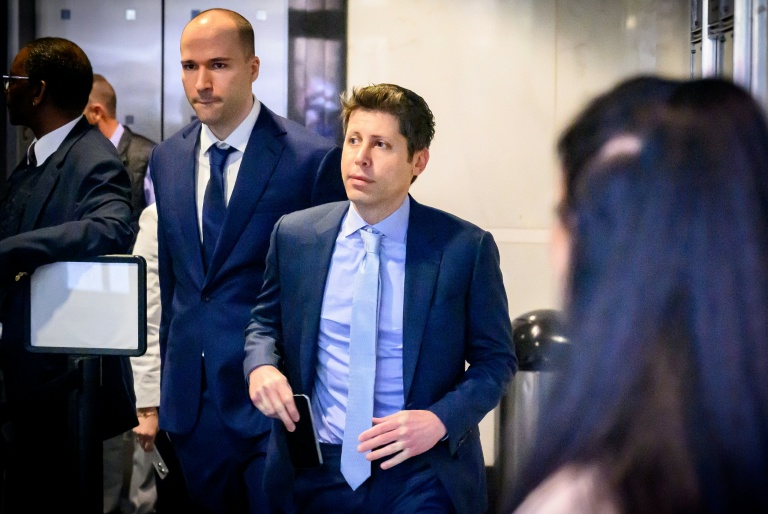
The trial has attracted intense media coverage, with dozens of journalists attending hearings daily. Altman and Brockman were seen sitting in the front row for almost the entire hearing, but they made no public statements inside or outside the courtroom.
The stakes are incredibly high. If Judge Yvonne Gonzalez Rogers rules in favor of Musk, OpenAI’s IPO could be jeopardized. This would not only affect OpenAI but could also reshape the global AI landscape, where major players like Google and Chinese tech firms are competing aggressively.
OpenAI is also facing growing competition from companies like Anthropic, whose Claude model is gaining traction. While the AI sector is already generating tens of billions in annual revenue, the industry requires massive investments in talent, advanced processors, and energy-intensive data centers.
The Broader Impact
Musk’s recent decision to fold his AI venture, xAI, into SpaceX—valued at about $1.25 trillion—has further complicated the competitive landscape. SpaceX is reportedly considering a public offering, adding another layer of complexity to the ongoing legal and business battles.
As the trial continues, the world watches closely to see how this dispute will shape the future of AI and the companies driving the next wave of technological innovation. The outcome could set a precedent for how AI companies balance profit, ethics, and competition in an increasingly fast-paced industry.
