Scientists Uncover 60-Year-Old Soviet Lander on the Moon
Discovery of a Lost Soviet Lunar Lander
Scientists have made a remarkable discovery by potentially locating the long-lost Soviet Union lander, Luna 9, more than 60 years after it vanished on the moon. This achievement marks a significant milestone in lunar exploration history.
Luna 9 was the first uncrewed spacecraft to execute a soft landing on the moon's surface on February 3, 1966—three years before the United States' Apollo missions. After capturing and transmitting images of the lunar landscape back to Earth, the craft's batteries eventually failed, and due to its chaotic landing, its exact location became a mystery.
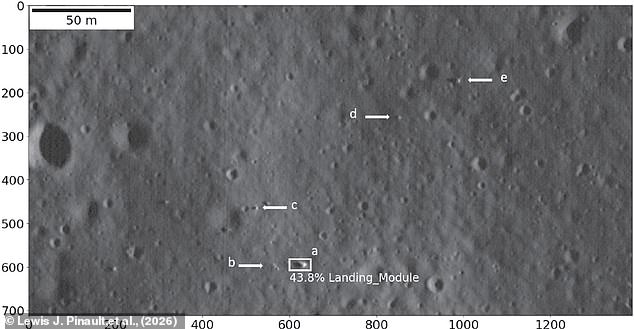
However, recent efforts by a team of scientists have brought them closer to solving this enigma. They developed a machine learning algorithm called 'You-Only-Look-Once—Extraterrestrial Artifact' (YOLO-ETA) to analyze hundreds of images taken by NASA's Lunar Reconnaissance Orbiter. Their focus was on a specific three-mile by three-mile area on the moon that had been targeted by the Soviets.
The algorithm identified several previously unseen features on the lunar surface, including disturbances in the soil that could be attributed to Luna 9's tumbling descent. These findings were located in the Oceanus Procellarum region of the moon.
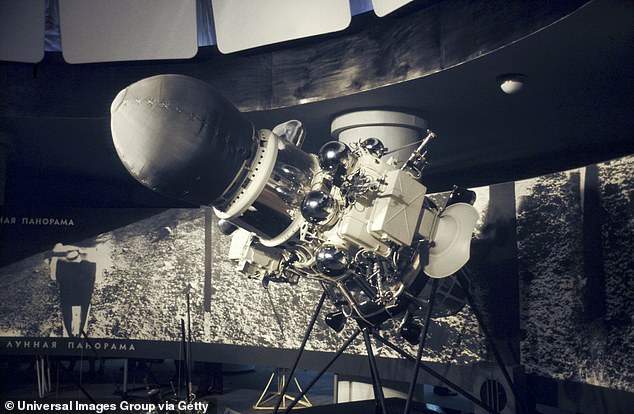
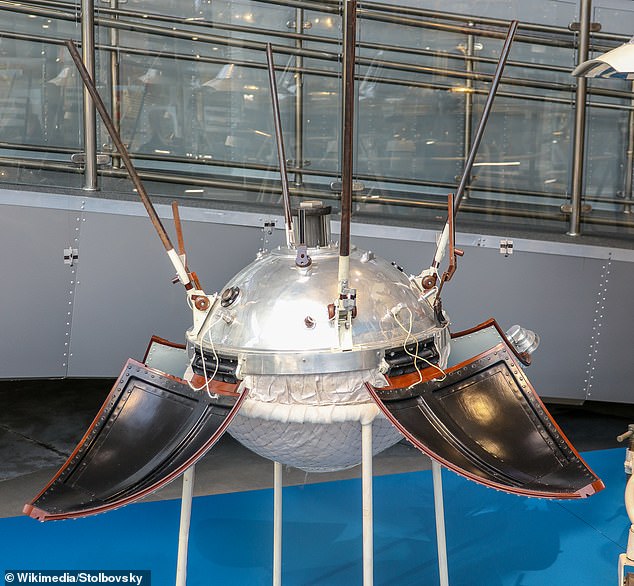
Luna 9 is notable for being the first human object to survive a relatively soft landing on the moon. Unlike the lunar lander used in the Apollo 11 mission in 1969, Luna 9 employed a spherical landing capsule that hit the lunar surface at a considerable speed. Just before impact, the craft fired its braking engine and inflated airbags to protect it as it landed at 14 miles per hour (22 km/h). Scientists believe the craft bounced several times in the moon's low gravity before coming to rest and stabilizing with four petal-like panels.
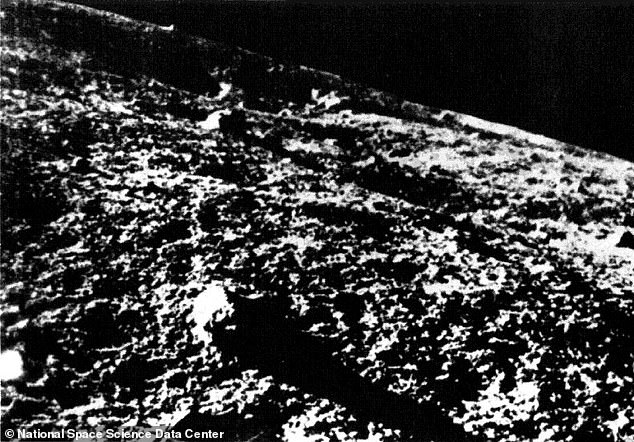
Without solar panels, Luna 9's batteries only lasted three days, during which it transmitted just nine images back to Earth. Due to miscalculations of its trajectory and a chaotic descent, the exact location of the lander remained unknown.
In 2009, NASA's Lunar Reconnaissance Orbiter began sending back high-resolution images of the moon. Researchers reasoned that among these thousands of photos, there must be an image showing Luna 9's landing site.
Key Details About Luna 9
- Spacecraft and lander combined weight: 1,538 kilograms
- Spacecraft and lander combined height: 2.7 meters
- Lander module diameter: 58 cm
- Lander module weight: 99 kg
- Launched: 31 January 1966
- Landed on the moon: 3 February 1966
The challenge was identifying a small capsule measuring just 23 inches (58 cm) in diameter within a vast amount of data. To address this, researchers trained a machine learning algorithm on known lunar landing sites so it could recognize telltale signs of spacecraft hardware.
The program was tested by identifying Apollo landing sites and the Soviet Union's Luna 16 probe. Once it achieved high accuracy under different lighting conditions, it was deployed to search for Luna 9's suspected landing region.
In their paper published in the journal npj Space Exploration, the researchers identified a potential location around 7.029° N, –64.329° E as a strong candidate for Luna 9's location. Within 200 meters of this main object, they also found several smaller marks that could be ejected components from the lander.
They noted: "The multiple detections by YOLO-ETA within this distance range could plausibly correspond to the lander and its ejected components."
Additionally, the program identified possible craters that might correspond to the impact sites of the lander and its modules.
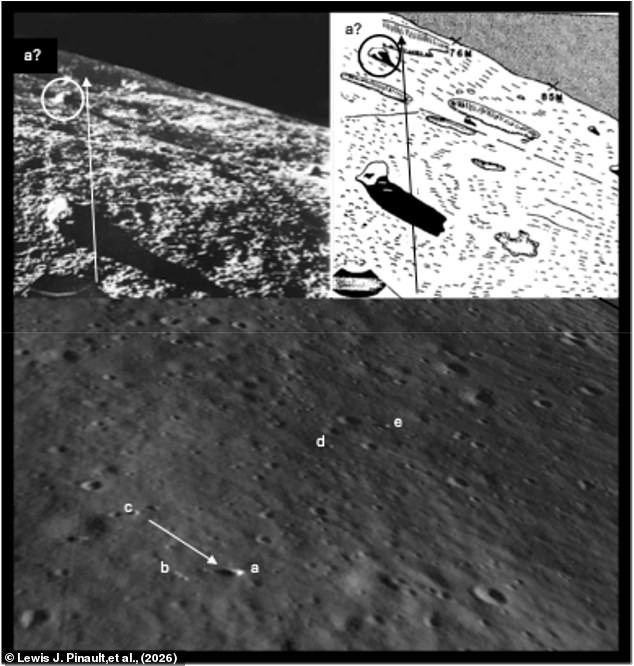
When the scientists compared their potential location to the images sent back by Luna 9, the horizon and general topography matched. The researchers concluded: "Taken together, these results identify a small cluster of features near 7.03° N, –64.33° E that display spatial and morphological characteristics consistent with spacecraft hardware."
Despite these promising findings, the researchers caution that the images from NASA's Lunar Reconnaissance Orbiter are not clear enough to confirm their discovery with certainty. Future observations using more advanced spacecraft under various lighting conditions will be necessary to verify the findings.
Fortunately, India’s Chandrayaan-2 is scheduled to launch in March 2026 and will fly over the same area identified by the researchers. If the images from this mission reveal more details about the potential landing site, it may finally confirm the location of the long-lost Luna 9 lander.
