The Day I Almost Died: Chris Pleasance Witnesses Top Gun Training in Malaysia
A Glimpse into the Realities of Exercise Red Flag
Inside a plane that looks like a regular passenger jet, but is actually a military aircraft, the experience of mid-air combat is anything but ordinary. The roar of engines, the intense G-forces, and the urgency of a missile system trying to lock onto an enemy are just some of the elements that make air combat simulations like Exercise Red Flag so intense.
This isn’t your typical flight. It's part of Exercise Red Flag, one of the most realistic air combat simulations in the world, held at Nellis Air Force Base near Las Vegas. As I boarded an RAF Voyager, a mid-air refueling aircraft, I was unaware that moments later, we would be on the brink of being shot down.
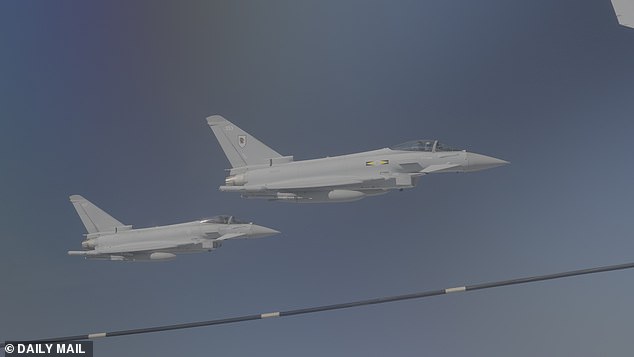
The scenario involved a "near-peer adversary," which essentially means either Russia or China. The mission was for an allied force consisting of British Typhoons, American, and Australian F-35s to destroy the enemy’s radar, effectively blinding their air defenses. The plan was to first send a few jets forward to bomb enemy infrastructure, causing the enemy to activate their air defenses, including their radar, in an attempt to shoot them down.
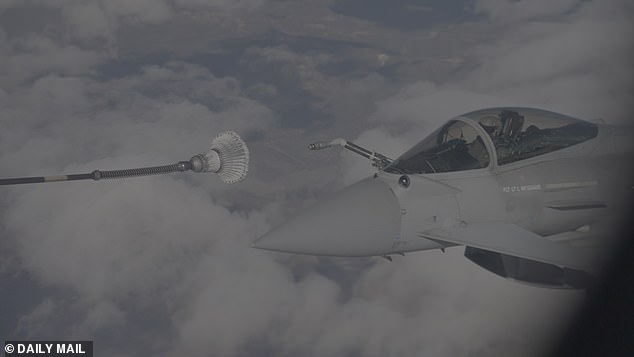
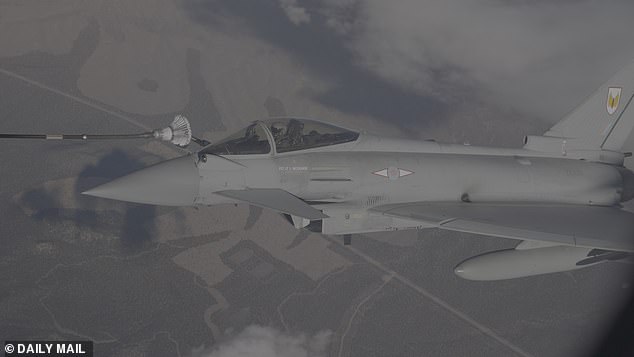
Once the radar was activated, a larger allied force would then attack it. The Voyager, although unarmed, played a crucial role by supporting the jets with refueling, allowing them to stay in the fight longer. However, the Voyager itself was a prime target for the enemy, as taking it out would disable all the jets relying on it.
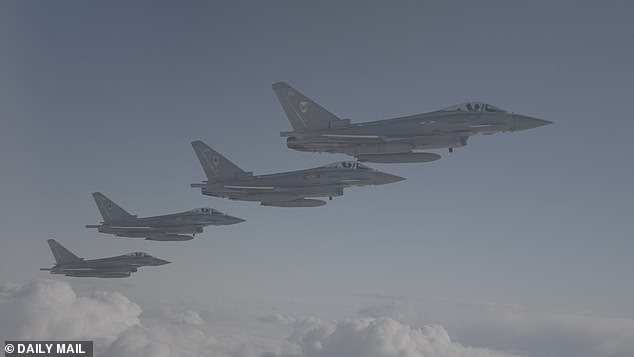
During the simulation, everything seemed to go smoothly. Our unseen wingmen were engaging the enemy ahead, while we provided support. At one point, four Typhoons formed up alongside the Voyager, taking fuel from both wings simultaneously. But then, a worrying ping on the radar indicated that an enemy plane had slipped past our front-line fighters and was heading towards the Voyager.
With no weapons to defend ourselves, the pilots had to prepare for evasive maneuvers if the enemy got too close. The Voyager, essentially an Airbus A330-200 painted in military colors, was not designed for such situations. The enemy jet came dangerously close, getting within 50 miles at one point. At speeds of up to 1,500 mph, this distance could be closed in just two minutes.
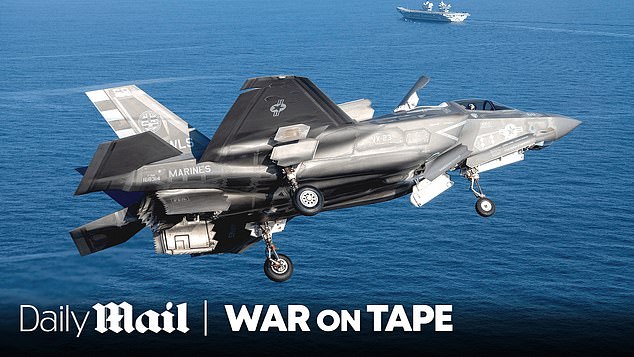
However, the escort managed to take down the opponent before it could get any closer. The Voyager continued its mission, refueling some US F-35s, before safely returning to base.
While the experience may seem exciting, these drills are serious business. Exercise Red Flag was created after the Vietnam War to give pilots real-world experience during their first ten flights, which are statistically the most dangerous. Back in those days, many pilots had actual combat experience. Today, however, many of the pilots have never seen combat, as the last time America and its allies faced a capable air force was over three decades ago.
In the event of a conflict with China or Russia, exercises like Red Flag will be critical in determining the difference between life and death.
These simulations provide invaluable training, preparing pilots for the unpredictable nature of modern warfare. Through realistic scenarios and constant adaptation, Exercise Red Flag ensures that pilots are ready for any challenge they may face in the skies.
