Major update confirmed for iPhone users
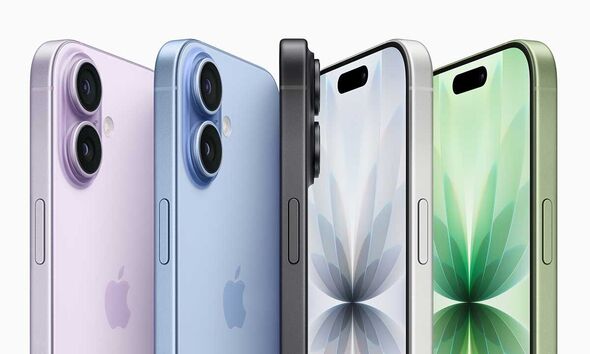
Although WhatsApp dominates the mobile messaging scene in the UK, many individuals rely on their smartphone's text messaging app to maintain communication with family, friends, and colleagues. For a long time, iPhone users have experienced text messaging in two distinct forms: blue or green bubbles. The blue ones indicate that the message is being sent to another iPhone or Apple device registered with iMessage, while the green ones signify communication with an Android phone.
This difference isn't just visual. Blue bubbles, as they are commonly referred to, offer additional features such as reactions and the ability to send high-resolution photos and videos. These messages can also be sent over an internet connection, whether through 4G, 5G, or Wi-Fi.
On the other hand, when an iPhone user sends a message to an Android phone, it appears as a green bubble. These messages are limited to the cellular network, and Apple has imposed restrictions on how these messages are sent. As a result, photos and videos shared between iPhone and Android devices often appear pixelated and of lower quality due to the inability to upload full-resolution content.
After years of frustration—especially as Apple has successfully encouraged millions to purchase iPhones in countries like the United States where SMS apps remain dominant—the blue/green bubble divide is finally set to end.
The change began with iOS 18 in 2024, when Apple introduced RCS for iPhone. This technology, known as Rich Communications Services, is a messaging standard used by apps like Google Messages on Android phones. It offers modern enhancements over traditional SMS, including the ability to send high-resolution media, reactions, and typing indicators.
While this was beneficial for Android users sending messages to iPhones more effectively, messages were still not encrypted by default. That is about to change.
iOS 26.5 is expected to introduce end-to-end encryption for RCS on the iPhone. This means that messages sent to Android phones will now be fully secure, something that is not possible with SMS. Similar to iMessage, WhatsApp, or Signal, end-to-end encryption ensures that only the sender and recipient can read the chat, and even Apple and Google cannot access the messages.
This development marks another step toward achieving messaging parity for modern smartphones. It’s surprising that it has taken so long, given the market is largely dominated by Apple's iOS and Google's Android platforms.
The team at 9to5Mac discovered the update in the beta version of iOS 26.5. This version is released to some users for testing before Apple officially rolls it out to all compatible iPhones worldwide.
iOS 26.5 is anticipated to be launched later in May.
