Ajax Tanks 'Poisoning Troops' in £6.3bn Crisis Report
The Ajax Armoured Vehicle: A Safety Crisis Unveiled
A recent safety report has raised serious concerns about the Army’s £6.3 billion Ajax armoured vehicle, suggesting that it may be exposing troops to toxic carbon monoxide fumes. This alarming revelation has sent shockwaves through the Ministry of Defence (MoD), with fears that the troubled project will require millions more pounds in public funding to resolve a range of critical issues.
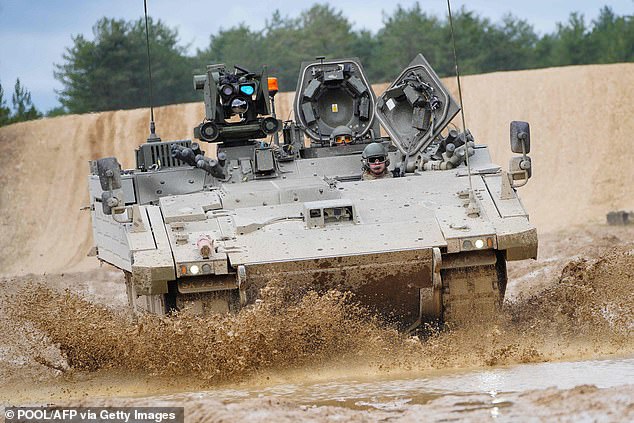
The official report, obtained by the Mail on Sunday, highlights a complex web of problems affecting the Ajax vehicles. These include faulty headsets, mechanical defects, and possible missing air filters and leaks that could lead to the accumulation of harmful gases inside the vehicle. The findings have sparked widespread concern, particularly given the scale of the project and its intended role as the backbone of the Army’s armoured strike brigades for the next 30 years.
A Troubled Project from the Start
The Ajax programme was initially expected to deliver 589 vehicles, starting in 2017. However, the project has been plagued by delays and technical challenges since its inception. Early trials were suspended after troops suffered hearing damage, with over 300 soldiers requiring assessments after riding in the vehicles. The situation worsened last November when 33 soldiers operating 23 different vehicles experienced symptoms such as nausea, vomiting, numbness, hearing loss, muscle pain, and pins and needles during an exercise called Titan Storm.
Leaked details from the Army’s official safety investigation into the incident reveal a worrying array of issues. Inspectors identified problems with the vehicles’ tracks, loose or missing 'engine deck bolts', and unreliable power units. These components are meant to provide electrical power when the main engine is off. The combined effect of these issues is described as capable of increasing exposure to noise, vibration, heat, fumes, and workload.
Communication and Environmental Hazards
Faulty communication headsets and configuration errors were also identified as likely contributors to noise injury symptoms. Additionally, the report suggests that 'possible missing filters, leaks and incorrect hatch states' may have created conditions in which soldiers could be exposed to carbon monoxide and carbon dioxide fumes. The soldiers’ symptoms were found to be 'consistent' with such exposure.
Colonel Hamish de Bretton-Gordon, a former tank regiment commander, highlighted the severity of the issue. He stated, "If they have identified that filters are faulty or missing, that is a serious problem. But actually it's a very easy problem to fix - you just put new filters in them."
A Complex Web of Factors
The inspectors noted that when maintained and operated properly, the Ajax is not unsafe. However, they warned that the interaction of multiple factors may create conditions in which personnel experience symptoms of ill health. The report concluded that there is no single causal mechanism but rather a multi-factor combination involving platform condition, environmental stressors, system reliability, user behaviour under operational pressure, training and experience variability, cold exposure, and possible fume or CO/CO2 exposure.
The MoD was due to update MPs on the project last Thursday, but the announcement was delayed until early this week. While sources do not expect the Ajax programme to be completely axed, the safety report raises the prospect of the cash-strapped MoD having to find millions more funding to address the issues.
Col de Bretton-Gordon added, "The safety report has identified a whole host of issues. These issues are all fixable - and the MoD can only go forward with this if it funds them."
The MoD reiterated its commitment to safety, stating, "The safety of our people is non-negotiable. An extensive safety investigation into Exercise Titan Storm has now concluded, with an update to Parliament expected in the coming days."
