Israel approves major US fighter jet deal for F-35 and F-15IA planes
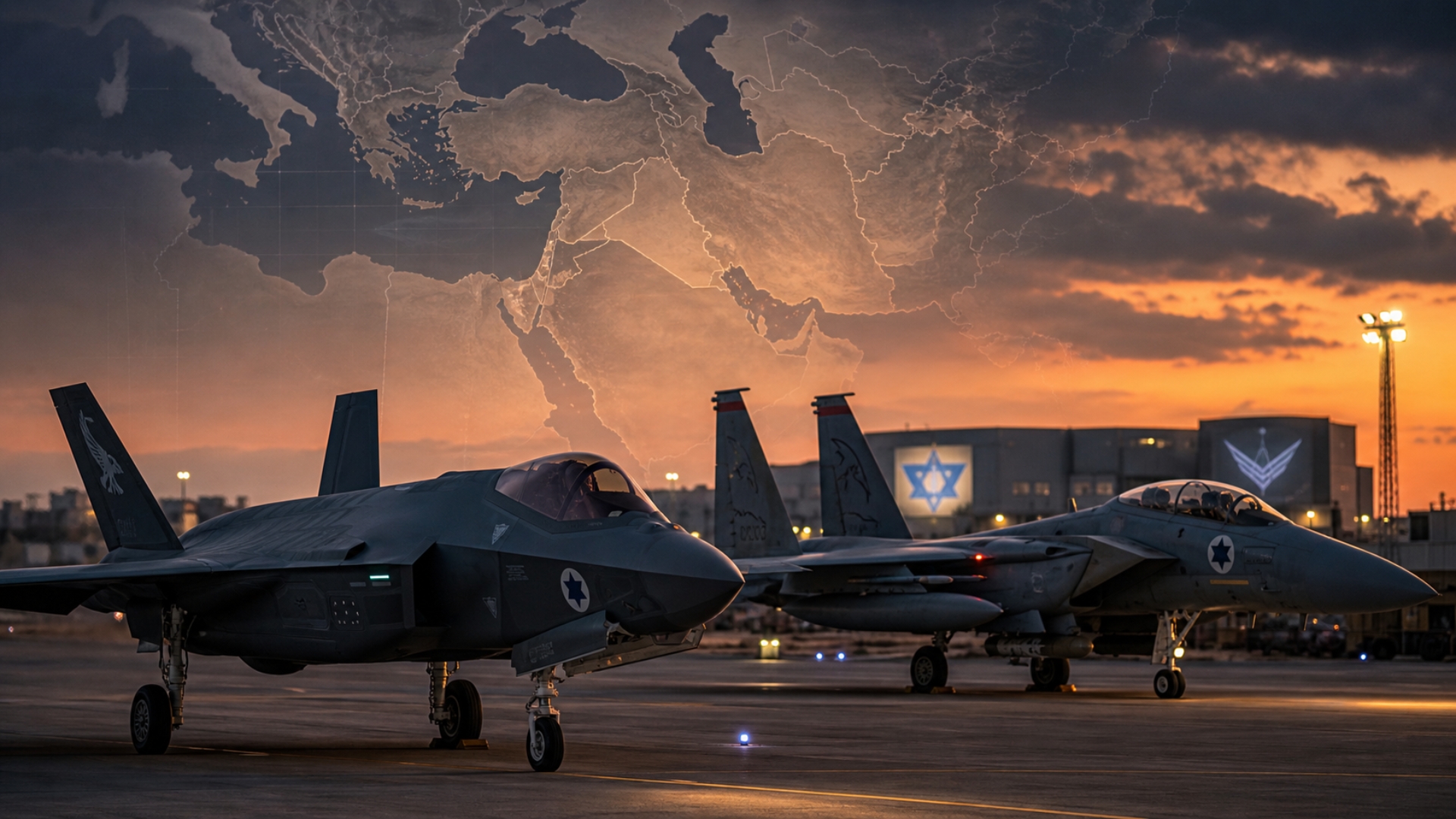
Israel's Strategic Move: A Major Air Power Upgrade
Israel has given the final approval to a significant new air power package, marking a major step in its military modernization efforts. The plan involves purchasing two new combat squadrons from U.S. manufacturers, one centered around Lockheed Martin’s F-35 and the other around Boeing’s F-15IA. According to reports, the package is valued at tens of billions of dollars and represents the first phase of a much larger procurement initiative worth 350 billion shekels, approximately $119 billion, aimed at enhancing the Israel Defense Forces over the next decade.
This scale of investment is not merely about updating the fleet; it is a long-term force-building decision influenced by lessons learned from recent conflicts, future-strike planning, and the expectation that Israel will need to maintain qualitative air superiority in an increasingly challenging regional environment.
Lessons from the Iran War
The decision to invest in these advanced aircraft has been directly linked to the experiences gained during hostilities with Iran. Israeli officials have emphasized that the conflict reaffirmed the critical role of air power in national defense. Defense Minister Israel Katz highlighted that the latest fighting underscored the importance of maintaining a strong aerial presence, while Defense Ministry Director General Amir Baram stressed the goal of securing Israel’s long-term military advantage.
This context explains why Israel is opting for both aircraft types rather than selecting one over the other. The war demonstrated the continued value of advanced stealth aircraft for penetrating defended airspace, but it also reinforced the necessity of large, heavily armed strike aircraft capable of carrying more payload and operating over long distances. This dual approach reflects a strategic balance between stealth and heavy-strike capabilities.
Why Both F-35s and F-15IAs?
The F-35 and F-15IA serve distinct strategic roles. The F-35 offers stealth, advanced sensors, and deep-strike survivability against high-end air defenses. In contrast, the F-15IA provides heavy payload capacity, speed, and flexibility for larger strike packages and sustained operations. Together, they offer a more comprehensive capability than either aircraft alone.
This combination is particularly relevant following months of conflict, during which Israel has had to consider not only deterrence but also repeated long-range operations, multi-front escalation, and the possibility of fighting under missile and drone pressure. A mixed fleet allows the air force greater flexibility for both opening strikes and follow-on operations.
Strengthening U.S.-Israel Defense Ties
Beyond the aircraft themselves, this deal underscores the significance of U.S. defense support to Israel’s military structure. Reports indicate that the fighter purchase comes at a time when the war against Iran has strained broader U.S. weapons stockpiles, creating pressure across allied supply chains.
Despite these challenges, the U.S. continues to supply Israel with some of the most advanced air capabilities available. For instance, Boeing has already received an $8.6 billion Pentagon contract in late 2025 for 25 F-15IAs for Israel, with an option for 25 more. This indicates that the buildup has been underway for months and is being solidified over the long term.
A Message of Deterrence
The purchase serves as a strategic message, signaling that Israel is not only modernizing its air force but also reinforcing its long-range strike capacity. This message is directed at multiple audiences. It aims to deter Iran by highlighting the threat of future Israeli reach, to show that the air arm remains central to managing regional tensions, and to demonstrate to the domestic audience that the government is investing in critical capabilities post-war.
What Comes Next?
The clear takeaway is that Israel’s acquisition of F-35s and F-15IAs is more than just a defense procurement story. It reflects the country’s post-war military priorities: deeper strike capacity, stronger deterrence, and continued reliance on high-end U.S. airpower.
A key insight is that the Iran war did not diminish Israel’s faith in air power—it strengthened it. This jet purchase demonstrates that Israel is preparing for a future where advanced aircraft remain central to how it projects force, deters rivals, and maintains its edge in the Middle East.
