Russia Enhances Shahed Drones with Missile Capability
The Evolution of Russian Drones in the Ukrainian Conflict
Russian Geran-2 drones, which are essentially a version of the Iranian-designed Shahed drone, have been a significant threat to the Ukrainian population during the ongoing conflict. These unmanned aerial vehicles (UAVs) have been responsible for numerous casualties and damage to infrastructure across the country.
According to an analysis from the Institute for Science and International Security, Russia launched nearly 6,600 Shahed-type UAVs in April 2026 alone. This averages out to approximately 219 UAVs per day, with 145 of them being Shahed or Geran models. The sheer volume of these attacks has placed immense pressure on Ukraine’s defense systems.
Defensive Measures and Technological Advancements
To protect its infrastructure, military assets, and civilian population, Ukraine has been working tirelessly to intercept these drones before they reach their intended targets. Over time, Ukrainian defenses have become increasingly effective at countering this threat. However, recent battlefield data suggests that Russia is adapting its strategy by modifying the drones to counter Ukraine’s air defenses.
Factory-Level Upgrades to the Geran-2
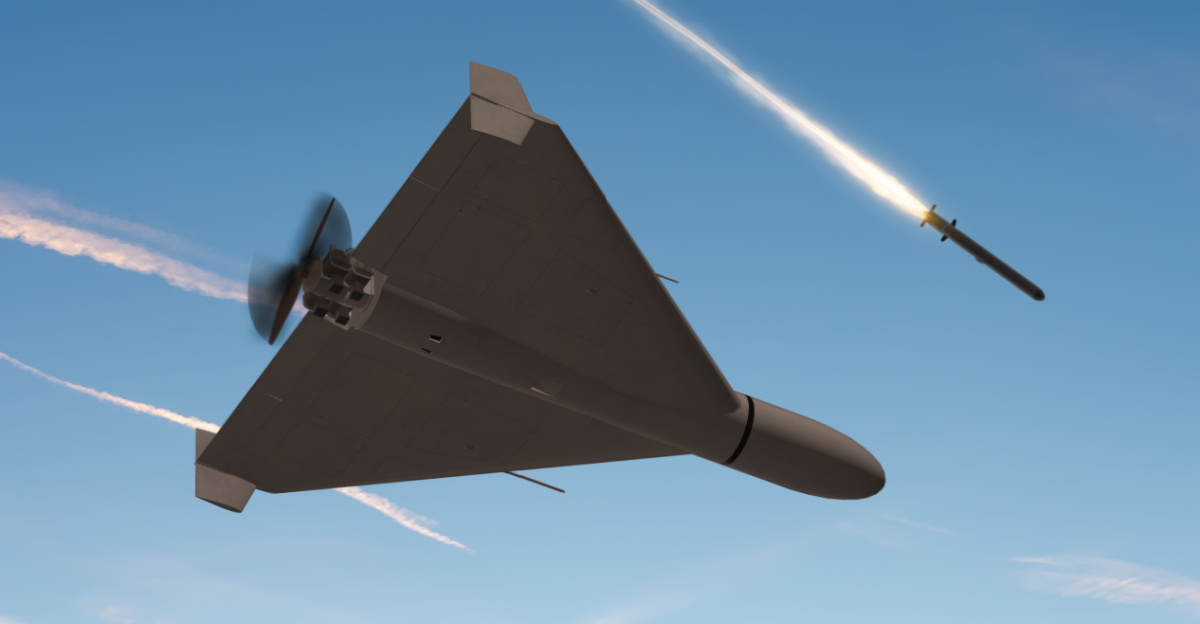
Recent reports indicate that Russia has made significant design changes to its Iranian-supplied Shahed-136 drones, which are known as “Geran-2” in Russian service. According to Ukrainian intelligence and open-source data, these modifications allow the drones to fire short-range air-to-air missiles.
The updated design includes a specific mounting groove built into the upper body of the drone. This space holds an APU-60-1MD launch rail, a component typically found on piloted aircraft. Because of this new hardware, the drone no longer carries its usual explosive payload. Additionally, the layout of the fuel tank has been adjusted to accommodate the weapon system.
These modifications suggest a shift in how Russia plans to use the Geran-2. Instead of targeting ground assets, the drones may now be deployed to counter Ukrainian air defenses, potentially making them more dangerous in the air.
Effectiveness of the Drones
Despite launching thousands of Shahed-type UAVs during the war, only a small percentage of them actually hit their targets. The Institute for Science and International Security highlights this issue, noting that on April 16, 659 Russian UAVs were launched, but only 3.03% of them hit their targets.
However, there were instances where the effectiveness of the drones was higher. For example, on April 7, 28.18% of a total of 110 UAVs managed to get through Ukraine’s air defenses.
Key Sources
- Institute for Science and International Security
- The Ukrainian Main Directorate of Intelligence
These sources provide critical insights into the evolving tactics and capabilities of Russian drones in the conflict. As the war continues, it remains to be seen how these technological advancements will impact the overall dynamics of the battlefield.
