Seoul Man Treated with Smartphone App for Sleeplessness
The Rise of Digital Therapeutics
A man in his 50s in Seoul has been suffering from insomnia for three years. Even if he lay in bed at midnight, he would barely fall asleep after 2 a.m. Sleeping pills provided only temporary relief. Then, the doctor gave an unusual prescription: not medication, but a smartphone app (App). The app recorded daily sleep time, set wake-up times, and sent warning messages if the smartphone was used late at night. Initially skeptical, after two months, his sleep onset time quickened and sleep quality improved. The software in the smartphone was essentially the therapist.
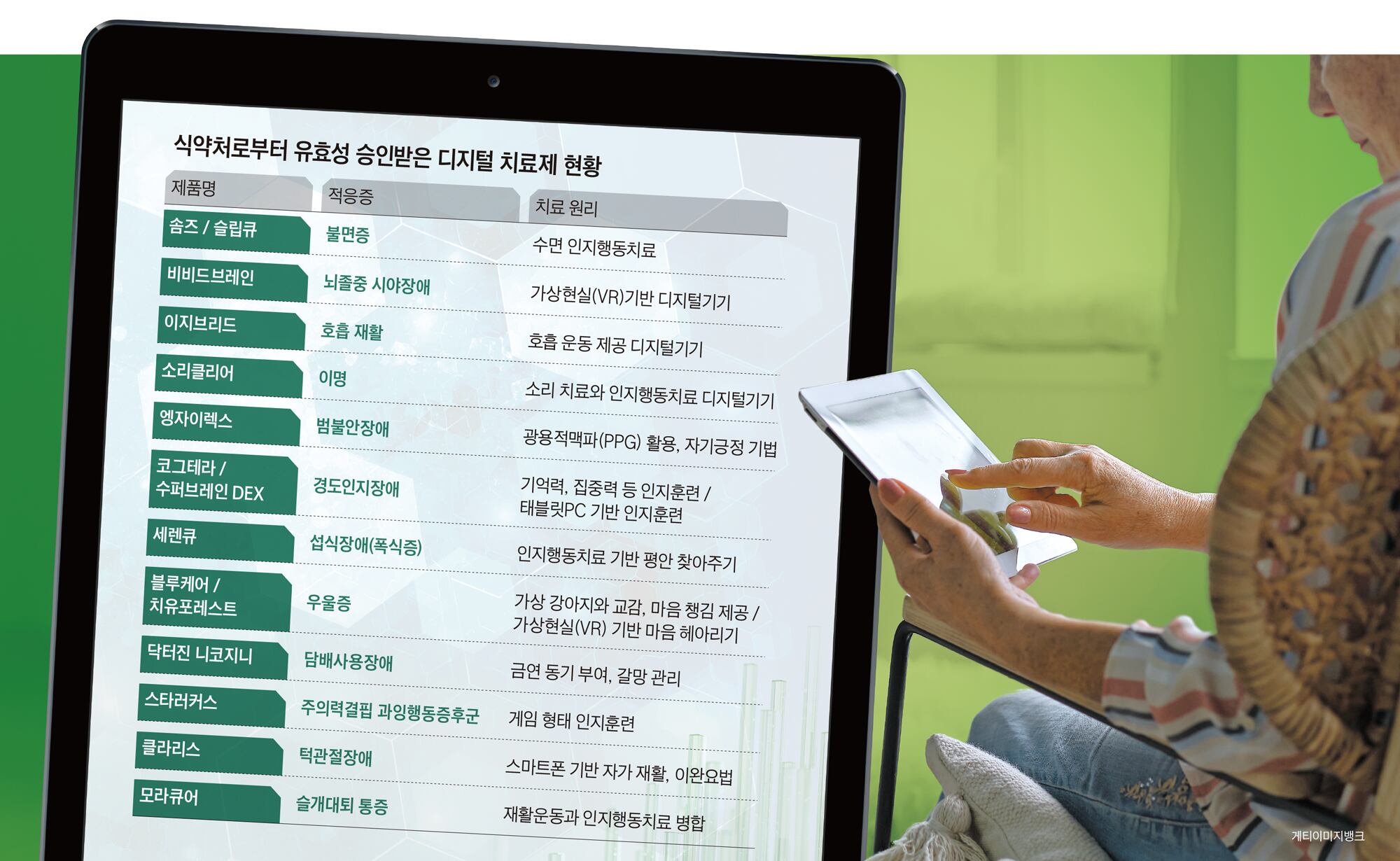
Digital therapeutics, which improve diseases by changing patients’ behaviors and lifestyles, are on the rise. Now, apps are medicine. Digital therapeutics are software medical devices that provide evidence-based therapeutic interventions to prevent, manage, and treat diseases. Unlike general health management apps, they must prove therapeutic effects through clinical trials and obtain approval from the Ministry of Food and Drug Safety. They are "app-based therapeutics" with verified treatment effects like pharmaceuticals. Currently, there are 15 digital therapeutics approved by the Ministry of Food and Drug Safety in South Korea. The fields are diverse, including insomnia, mild cognitive impairment, depression, anxiety, attention-deficit hyperactivity disorder (ADHD), and binge eating disorder.
Cognitive Behavioral Therapy as Core Function
Professor Kim Soo-jin from the Department of Psychiatry at Korea University Hospital said, "The core function of digital therapeutics is cognitive behavioral therapy, which improves symptoms by changing patients’ thoughts and behaviors," and "The therapeutic effects are known to be equivalent to medication in depression, anxiety disorders, insomnia, and addiction disorders."
When someone laughs nearby, a depressed person interprets it as "They’re mocking me," whereas a healthy person thinks, "They’re just laughing among themselves." Cognitive behavioral therapy is the process of identifying and correcting such distorted thinking. Structured around evidence, it’s easy to implement via apps. This is why digital therapeutics have first flourished in mental health.
Specific Applications in Mental Health
South Korea’s first digital therapeutics, Somz and SleepQ, target insomnia. The treatment principle is sleep cognitive behavioral therapy. Insomnia patients tend to stay in bed for long periods even when unable to sleep, which actually reduces sleep efficiency. Digital therapeutics analyze the user’s sleep patterns, fix wake-up times, adjust bed usage time, and provide sleep hygiene education. They check behavior every night. They are literally "digital naggers."
The ADHD treatment StallerKus is game-based. Children think they’re playing a game, but they’re actually training attention and working memory. Mild cognitive impairment is an intermediate stage between normal aging and dementia. Intervening at this stage may delay the onset and progression of dementia. Digital therapeutics SuperBrain DEX and CogThera repeatedly train memory, concentration, and problem-solving skills to enhance cognitive function.
Depression and anxiety disorders are also improved via smartphones. BlueCare provides mindfulness training by interacting with a virtual dog. Healing Forest uses virtual reality (VR) to aid emotional stability and self-understanding. Claris supports self-rehabilitation and relaxation therapy for temporomandibular joint disorder patients.
Expanding Treatment Beyond Hospitals
Professor Kim Soo-jin said, "Digital therapeutics expand the treatment space from hospitals to daily life," and "When therapeutics meet AI (artificial intelligence), they will develop toward providing personalized behavioral interventions."
Currently, most digital therapeutics are prescribed by doctors. They are non-covered treatments not yet applied under health insurance. Patients must bear costs ranging from tens of thousands to hundreds of thousands of Korean won. It is expected that digital therapeutics will be fully activated once health insurance coverage is expanded.
Subscription Offers for Readers
월 5900원 멤버십, 신문 독자에게는 2900원, 조선멤버십
55000원 상당의 신문-잡지 8종 마음껏 보기, 조선멤버십
현금처럼 쓸 7000포인트 받아 알뜰한 쇼핑, 조선멤버십
