Prepare for the cosmic end: Scientists say universe will collapse much sooner than expected
New Prediction: The Universe Will End Sooner Than Expected
Scientists have made a groundbreaking prediction about the end of the universe, suggesting it will occur trillions of years earlier than previously thought. This new theory challenges long-held assumptions about how the cosmos will meet its end.
For many years, the prevailing belief was that the universe would eventually experience a gradual "heat death," where all energy is evenly distributed and no more work can be done. However, recent research from the Donostia International Physics Center suggests a much more dramatic conclusion to the universe's existence.
According to their simulations, the entire cosmos will reach the end of its life precisely 33.3 billion years after the Big Bang. Given that the universe is currently 13.8 billion years old, this means we have less than 20 billion years left before the end.
The Big Crunch Scenario
The proposed scenario, known as the "Big Crunch," involves the reversal of the universe's current expansion. Galaxies, stars, and planets will collapse towards a single point, leading to a violent end for everything in existence.
As this process occurs, the Earth and all other celestial bodies will be crushed and swallowed by black holes. The researchers' paper states: "Eventually, it is plausible that the universe ends in giant black holes."
Two Possible Fates of the Universe
Scientists generally believe there are two ways the universe might end: either it continues expanding until it becomes a frozen void or it collapses in a fiery crunch. The outcome depends largely on the strength of dark energy, a mysterious force driving the universe apart.
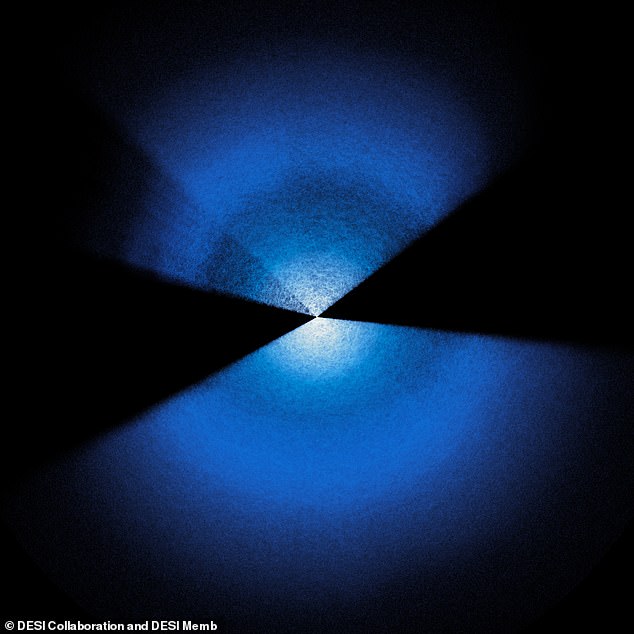
Until recently, astronomers believed that dark energy was a universal constant, ensuring the universe's expansion would continue accelerating. However, new data from the Dark Energy Survey Instrument (DESI) suggest otherwise.
This massive map of 47 million galaxies has revealed that dark energy is not a constant but changes over time. If true, this could mean the universe's expansion might slow down and even reverse, pulling matter back together like a rewind of the Big Bang.
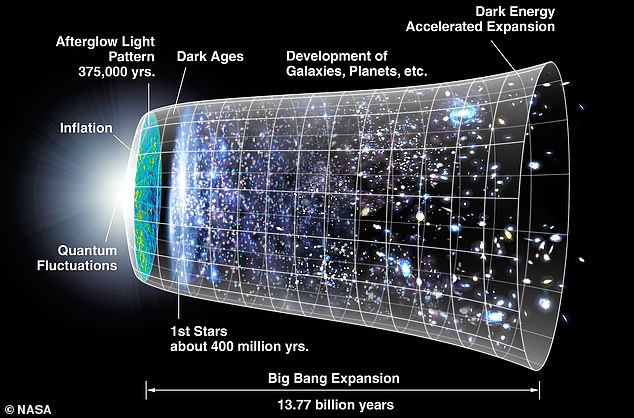
Understanding the Expansion of the Universe
Observations from the Hubble Space Telescope show that the universe is expanding at an accelerating rate. However, this does not mean the universe is expanding into anything, nor are galaxies like the Milky Way getting bigger.
Imagine the universe as dots on the surface of a balloon. As you blow air into the balloon, the surface stretches, and the dots move apart. Similarly, the cosmos expands by stretching the fabric of spacetime itself while planets and galaxies remain the same size.
This model, known as the axion dark energy (aDE) model, combines a very light form of dark matter called an axion field with a fixed background expansion known as the cosmological constant.
The Implications of the aDE Model
Applying the aDE model to data from the DESI survey, researchers found that it could explain everything scientists have observed about the universe. However, they also discovered that this form of dark energy inevitably leads to the Big Crunch.
Once the universe expands beyond a certain size, the interaction between the axion field and the cosmological constant pulls the universe back together. This reverse expansion will continue until the entire universe is crushed back into a single point of matter known as a singularity.
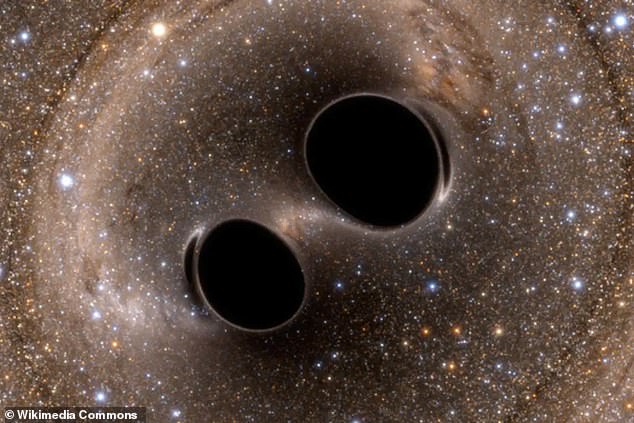
As acceleration reverses, the researchers say that matter will be "squeezed together." Lead author Dr. Hoang Nhan Luu and his co-authors note that this will "enhance the formation of black holes, in particular the merging of black holes."
They added: "As the universe is collapsing, one can imagine that matters are push together to form a giant black hole, which in turn shields/hides the crunch singularity."
A Future Full of Uncertainty
While the researchers suggest that this might not significantly affect future inhabitants of Earth, the future of our universe remains uncertain. The observations from DESI's latest survey are still being analyzed, and scientists need more time to verify the findings.
The first papers on the DESI's observations are expected next year, which should help confirm whether dark energy is indeed changing. Additionally, more data will be needed to validate the aDE model.
Dr. Luu writes: "More and better data are expected in the near future and the aDE model will be rigorously tested. If confirmed, the aDE model parameters – and the universe's lifespan – will be more precisely determined."
